
Our Location
Strip District Terminal
The Pittsburgh Walk of Fame is located at The Terminal in Pittsburgh’s bustling Strip District, where a broad sidewalk extends uninterrupted along Smallman Street, from 16th to 21st streets. The visitor attraction currently runs between 18th and 19th streets, but will expand each year.
The five-block-long landmark Terminal building, which opened as a produce terminal in 1929, was recently revitalized and has become a hot spot destination for dining, shopping, entertainment, and more. And nearby Penn Avenue pulsates with its own energy. You’ll find much to see and do after taking in the Pittsburgh Walk of Fame!
Parking
Street parking is available on Smallman Street, and a parking lot behind The Terminal is accessible via entrances on Smallman at 16th Street and on 21st Street.An Historic Area
In 2014, the area bounded by Railroad Street, 22nd Street, Liberty Avenue, and 15th Street was designated by the National Park Service as the Strip Historic District, listed on the National Register of Historic Places. The Terminal is an iconic landmark within this district.
Courtesy of Rycon Construction

The History of the Terminal Building
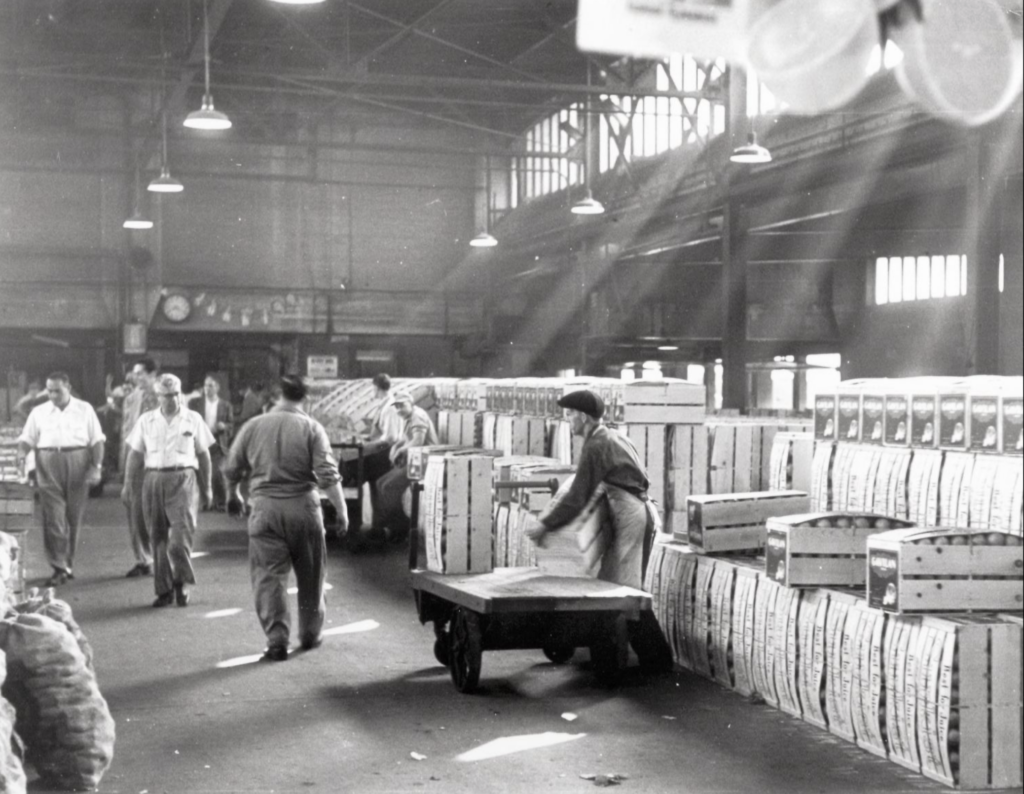
The Strip District Terminal opened in 1929 as the Pennsylvania Railroad Fruit Auction & Sales Building to serve the tri-state area as a produce distribution hub. Iconic in length and design, the terminal functioned as the economic heart of the Strip District for more than 40 years.
The Produce Terminal building was designed for transferring goods from one carrier to another with minimal provision for short-term storage. Perishable produce arrived, was inspected by potential buyers, and then was auctioned at the two-story east end of the building, after which it was transferred to the buyer for transport.
A Produce Distribution Hub
The one-story length of the inspection shed was designed for loading and unloading boxcars from either side. The red brick construction, Art Deco-influenced detailing of the brick and limestone parapet walls, and the original steel sash clerestory and monitor windows of the inspection shed continue to be character-defining features.
Other notable features are the wood-paneled fold-up cargo doors, easily visible on the back side of the inspection shed, where the original copper canopy is still intact above. On the Smallman Street side, although slightly modified with the installation of stairs and railings, the original concrete loading dock and cantilevered steel frame canopies also remain.

The Surrounding Buildings
The low-rise, 1920s-era building was built along five blocks of the north side of Smallman Street, while a mix of late-nineteenth and early-twentieth-century low-rise and multi-story warehouse and industrial buildings—many now restored and revitalized—developed along the street’s south side. The pronounced setback of the Produce Terminal building widened the portion of Smallman Street from 16th Street to 21st Street to allow for the loading of vehicles from its elevated platforms. This dramatic expanse created a plaza-like effect that is highlighted on the east by the façade of St. Stanislaus Kostka Roman Catholic Church.
A Transformational Plan
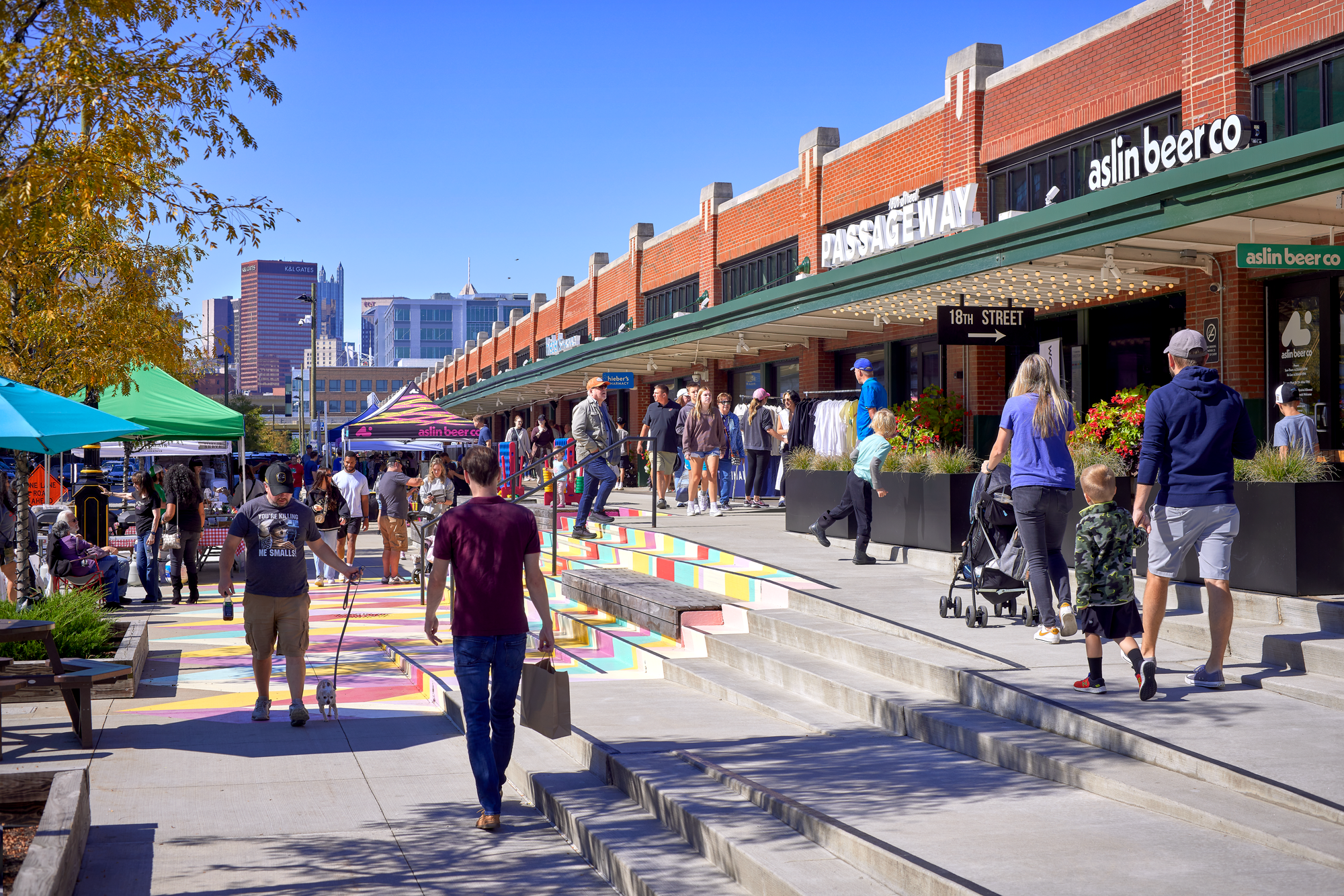
In 2014, after the terminal building had fallen into disrepair and was no longer in use, the Urban Redevelopment Authority issued a request for proposals to preserve and transform the historic structure. In its RFP, the organization indicated that “along with Saint Stanislaus Church, the Produce Terminal is an architectural focal point that helps bridge the marketplace and the riverfront. Whether the eventual re-use of the Produce Terminal is boutique retail, professional offices, museum space, an indoor market or showrooms, it will act as a gathering place unto itself.”
With a few Strip District adaptive reuse projects already under its belt, McCaffery Interests took on the challenge of creating a mixed-use vision for the terminal building that would enhance the energy and vitality of the bustling neighborhood.
Two Visions Become Reality
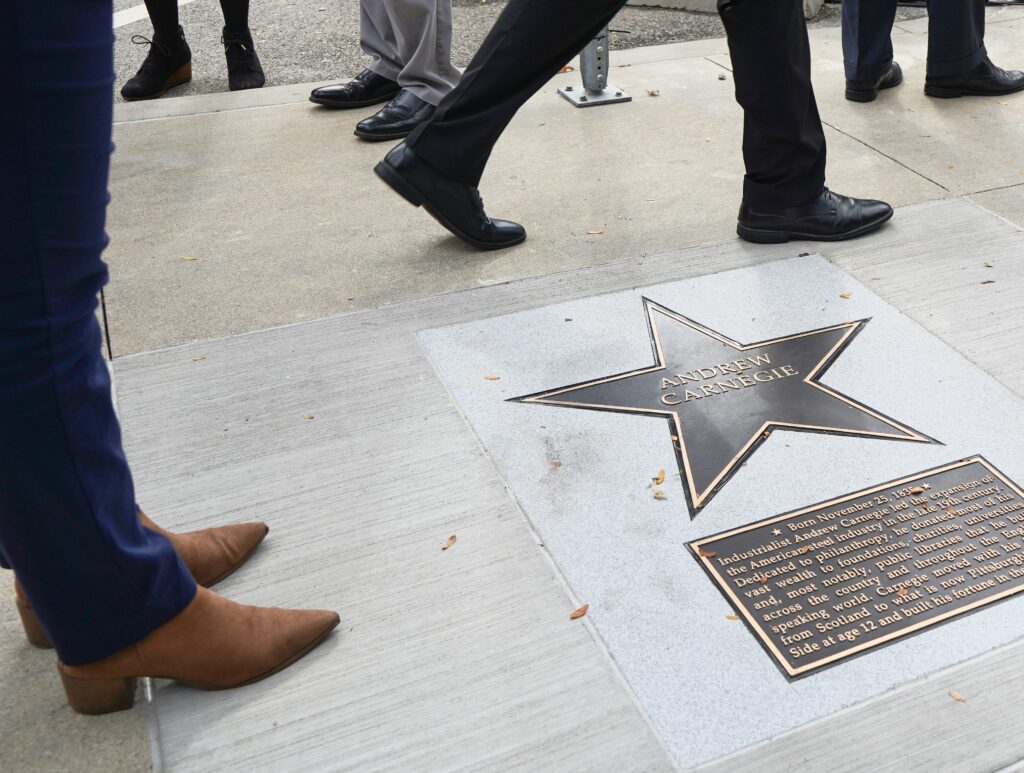
In 2019, work on the old Produce Terminal began, and the new Strip District Terminal was underway. The first businesses to open there launched in 2021. Meanwhile, the nonprofit Pittsburgh Walk of Fame was being developed and in search of a home. The historic nature of the terminal building and the extensive length of the new sidewalk in front of it made the site ideal for this new visitor attraction. A partnership was formed, and the first bronze stars on the Smallman Street sidewalk were unveiled in October 2025.
The Terminal has been returned to its rightful place as an essential piece of the Strip District’s commercial and community fabric, and the Pittsburgh Walk of Fame is proud to be part of it, adding a noteworthy historical element to this popular gathering spot.
Make a Donation
Your donation, whatever the amount, will go a long way towards expanding and maintaining the Pittsburgh Walk of Fame.